
The Transformation of App Development Through Serverless Architecture
Serverless architecture is revolutionizing how modern applications are built and deployed. By eliminating the need to manage infrastructure, businesses can focus entirely on writing code while benefiting from automatic scalability, reduced operational costs, and faster time-to-market. In this blog, we explore how serverless technologies enable developers to build highly scalable and efficient applications without the complexity of traditional server management. Discover how this approach is helping businesses innovate faster and how AtumCode leverages serverless solutions to deliver flexible, high-performance apps.
BACKEND DEVELOPMENTCUSTOM SOFTWARE DEVELOPMENTAIAPI
Srushti M.
3/24/20264 min read
Understanding Serverless Architecture
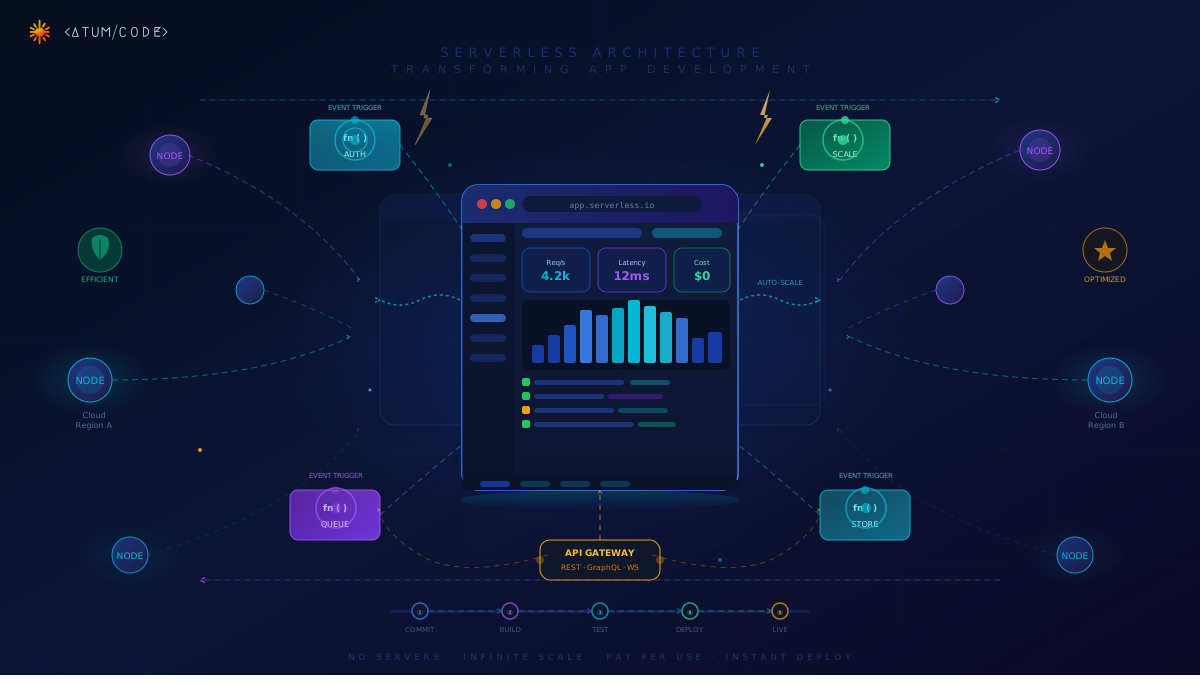
Serverless architecture is an innovative model for building and deploying applications without the complexities associated with traditional server management. At its core, this architecture relies on a cloud computing service provider that manages the infrastructure, allowing developers to focus on writing code without worrying about server provisioning or maintenance.
Key components of serverless computing include Function as a Service (FaaS) and Backend as a Service (BaaS). FaaS enables developers to run individual functions or pieces of code in response to events without the need for explicit server management. This allows applications to scale automatically based on demand, significantly reducing costs and improving efficiency. On the other hand, BaaS provides backend services such as databases, storage, and authentication, streamlining the development process by reducing the need for backend code.
The primary distinction between serverless solutions and traditional server-based environments lies in how resources are allocated and billed. In conventional setups, resources are typically pre-allocated, incurring costs regardless of usage. Conversely, serverless architecture operates on a pay-as-you-go model, where charges apply only for the compute power consumed during the execution of functions. This approach not only optimizes resource utilization but also encourages a more agile development process.
Significant players in the cloud computing space, including AWS Lambda, Azure Functions, and Google Cloud Functions, provide robust serverless platforms. They empower developers to create applications quickly and efficiently by abstracting the underlying server infrastructure. As these services evolve, the adoption of serverless architecture continues to grow, promising an efficient future for app development.
Benefits of Serverless Architecture
As organizations increasingly seek to enhance their application development processes, adopting serverless architecture has emerged as a compelling strategy. One of the most notable advantages of this paradigm is its scalability. In a traditional setup, managing workloads often requires extensive infrastructure investments and careful planning to accommodate fluctuating user demands. However, serverless architecture allows organizations to automatically scale their applications in real time, effectively responding to user demand without the need for manual intervention. This dynamic resource management minimizes downtime and optimizes performance during peak times, enhancing the overall user experience.
Cost efficiency is another significant benefit of embracing serverless solutions. Unlike conventional platforms that necessitate a constant expenditure for dedicated servers and resources, serverless architecture operates on a pay-as-you-go model. Organizations are charged only for the computing resources they utilize, which can lead to substantial cost reductions. This capability enables businesses to allocate their budgets more effectively, as they can invest in areas that directly contribute to growth rather than infrastructure maintenance.
Moreover, serverless architecture facilitates faster deployment times, a critical factor in today’s fast-paced tech landscape. With serverless computing, development teams can streamline their processes, reducing the complexity of setting up and managing server infrastructure. This simplification accelerates release cycles, allowing organizations to push updates and new features to market more quickly. The agility gained through serverless solutions not only shortens development timelines but also fosters innovation, enabling teams to experiment and iterate swiftly.
In summary, the benefits of adopting serverless architecture in app development—scalability, cost efficiency, and faster deployment times—position organizations to operate more effectively and maintain a competitive edge in their respective industries.
Building Scalable Applications with Serverless Technologies
In recent years, serverless architecture has emerged as a revolutionary approach in application development, enabling businesses to build scalable applications with remarkable efficiency. By abstracting server management and automating infrastructure tasks, serverless technologies such as AWS Lambda, Azure Functions, and Google Cloud Functions allow developers to focus on writing code, thereby improving productivity and reducing time-to-market.
One of the prominent use cases of serverless technology can be found in the e-commerce sector. For instance, major retailers utilize serverless functions to handle peak traffic during sales events. When demand surges, these functions automatically scale based on incoming requests, ensuring that customers experience seamless performance without the need to provision additional infrastructure. This capability not only enhances the user experience but also significantly reduces operational costs, as businesses only pay for the compute time they use.
Another area where serverless technologies shine is in the deployment of microservices. By integrating serverless solutions with microservices architecture, organizations can deploy independent units of functionality that can scale autonomously. This way, applications can efficiently handle specific tasks, such as image processing or data processing, without monopolizing resources. For example, a media company might employ serverless computing to manage video uploads and transcoding, allowing them to process large files asynchronously without impacting other services.
Moreover, serverless architecture seamlessly aligns with cloud-native approaches, enhancing the overall agility and responsiveness of software development. Businesses can quickly integrate various APIs and third-party services, allowing for rapid innovation and iterative development. This flexibility is particularly beneficial in modern Continous Integration/Continuous Deployment (CI/CD) pipelines, where organizations strive for frequent updates and reliable releases. As a result, serverless technologies not only foster more scalable applications but also align with contemporary development practices, driving efficiencies across the software lifecycle.
Challenges and Considerations in Serverless Development
As businesses consider adopting serverless architecture, it is essential to understand the challenges and considerations that accompany this transformative approach. One significant concern is vendor lock-in. Many serverless platforms, such as AWS Lambda, Azure Functions, and Google Cloud Functions, have proprietary features and functionalities that could make it difficult for organizations to switch providers without incurring substantial migration costs. To mitigate this risk, organizations may consider designing their applications to be portable and using multi-cloud strategies that can help avoid heavy reliance on a single vendor.
Moreover, serverless architectures can complicate monitoring and debugging. Unlike traditional server-based environments, where developers can easily access logs and metrics, serverless functions often operate in a distributed environment. This can make it challenging to trace errors or performance bottlenecks. To address this issue, businesses should implement robust monitoring tools and establish effective logging practices that can provide real-time insights into application behavior. Solutions like distributed tracing can help maintain visibility across different services, aiding in faster diagnosis of issues.
Performance is another critical consideration when implementing serverless technologies. Cold start times can vary depending on the provider and the specific service, potentially impacting user experience, particularly in latency-sensitive applications. Organizations can optimize performance by keeping functions lightweight and minimizing the initialization code. Additionally, regularly testing and tuning functions can lead to improved consistency in performance over time.
In conclusion, while serverless architecture offers numerous advantages, such as scalability and flexibility, businesses must navigate various challenges, including vendor lock-in, monitoring complexities, and performance concerns. By planning strategically and assessing their specific needs, organizations can successfully embrace serverless technologies and harness their full potential for application development.
Connect With Us
Your partner in custom software solutions and design.
Innovate Today, Reach Out!
contact@atumcode.com
+1 202 292 4041
+91 801 091 1708
© 2026. All rights reserved.
Warje, Pune 411058, Maharashtra, India

AtumCode Solutions Pvt. Ltd.
Beyond Code, Building Vision!
D&B D-U-N-S Number : 76-637-9675