
Designing Apps for the Metaverse Economy: Crafting Immersive Experiences for Brands
The metaverse economy is opening new frontiers for digital commerce, brand engagement, and immersive user experiences. As virtual worlds become more interactive and commerce-driven, businesses have an opportunity to build applications that enable virtual storefronts, digital assets, interactive communities, and real-time engagement. In this blog, we explore how brands can design apps tailored for metaverse ecosystems—leveraging AR/VR, blockchain-based assets, and immersive UX design. Discover how forward-thinking companies can position themselves in this evolving digital landscape and how AtumCode builds scalable, immersive applications ready for the metaverse era.
UI/UXCUSTOM SOFTWARE DEVELOPMENTMOBILE APP DEVELOPMENTAI
Atharv B.
4/28/20267 min read
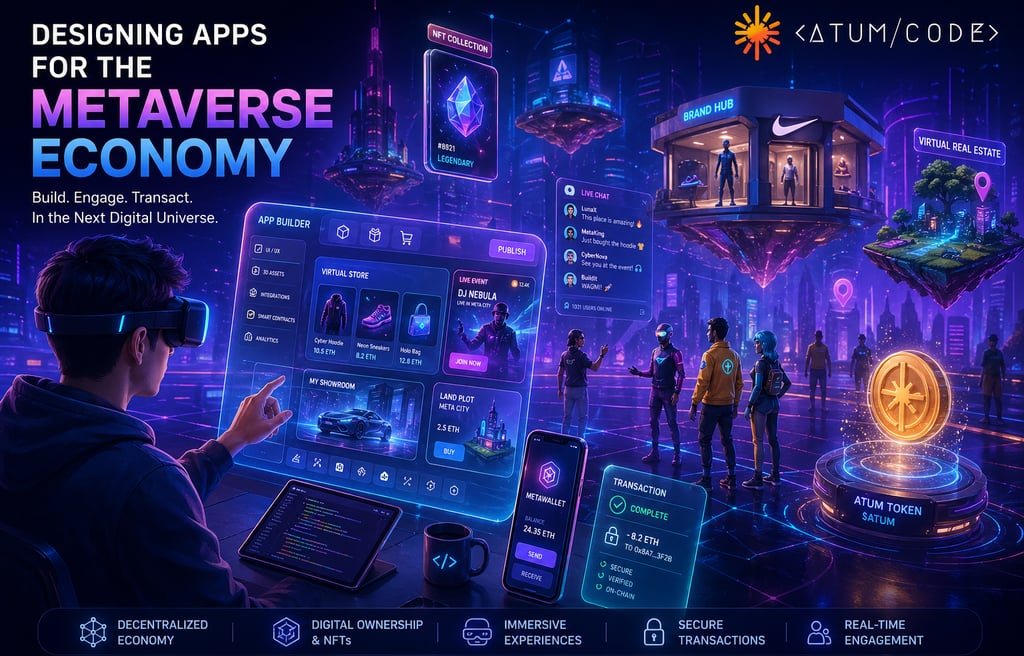
Understanding the Metaverse Economy
The metaverse economy represents a transformative shift in how individuals and businesses interact within virtual environments. It encompasses various digital realms where users can engage, socialize, and transact using virtual currencies and assets. Central to the metaverse economy is the concept of virtual worlds, which are immersive spaces created by technology that facilitate social engagement, commerce, and entertainment.
The integral components of the metaverse economy include virtual reality (VR), augmented reality (AR), blockchain technologies, and digital marketplaces. These elements foster an interconnected ecosystem where brands can craft tailored experiences for their consumers. For instance, in the metaverse, users can explore shops, attend events, or engage with services just as they would in the physical world; however, these activities often yield enhanced experiences, such as interactivity and gamification.
Furthermore, the metaverse economy is reshaping consumer behavior significantly. As users increasingly spend time in these digital spaces, their preferences and spending habits are being influenced by the unique experiences offered. Brands are presented with new avenues to engage with their target audience, building brand loyalty through immersive storytelling and personalized interactions. This shift is driven by the growing acceptance of virtual goods and services, ultimately redefining traditional commerce.
The significance of the metaverse economy cannot be overstated; it opens opportunities for businesses to tap into new markets and innovate their marketing strategies. By leveraging the power of immersive experiences, brands can create deeper connections with their consumers, ensuring they remain relevant in an evolving digital landscape. As technology continues to advance, the potential of the metaverse economy to alter consumer interactions and drive economic growth will only increase.
Core Principles of App Design for the Metaverse
Designing applications for the metaverse requires a thoughtful approach that takes into account the unique characteristics and user expectations of virtual environments. One of the core principles of app design in this context is the emphasis on creating intuitive user interfaces. Since users will navigate within a three-dimensional space, it is crucial that interface elements are easily accessible and visually comprehensible. Employing spatial organization, clear navigation paths, and recognizable icons can significantly enhance user interaction.
Another essential principle involves the crafting of engaging user experiences. In the metaverse, users seek interactive and immersive experiences that go beyond traditional application functionalities. This can be achieved by integrating elements of gamification, storytelling, and social interaction. By designing experiences that allow users to connect in meaningful ways, brands can foster loyalty and encourage community building.
Moreover, ensuring seamless interactions within virtual environments is paramount. Effective app design in the metaverse must account for performance and connectivity issues that users may encounter. Optimizing load times and minimizing latency can contribute to a smooth user experience. Additionally, providing clear feedback within the application can help users understand their actions and the consequences within the virtual space.
Collaboration tools and features are another important aspect to consider, as the metaverse is inherently a shared space. Apps that facilitate teamwork and interaction among users can enhance the overall experience, making it more dynamic and participative. In summary, focusing on intuitive design, engaging experiences, and seamless interactions are fundamental principles of app design for the metaverse, catering to the evolving needs of digital consumers.
Technologies Driving Metaverse Applications
The evolution of metaverse applications is significantly influenced by several key technologies, namely Virtual Reality (VR), Augmented Reality (AR), blockchain, and Non-Fungible Tokens (NFTs). Each of these technologies plays a crucial role in shaping the immersive experiences that define the metaverse economy.
Virtual Reality (VR) offers users fully immersive environments where they can interact with the virtual world seamlessly. By utilizing VR headsets and motion sensors, users can explore digital spaces as if they were physically present. This functionality enhances user engagement, allowing brands to deliver captivating experiences that foster deeper connections with their audiences. Similarly, Augmented Reality (AR) complements VR by overlaying digital content onto the physical world. AR technology enables brands to create interactive experiences that blend reality with virtual elements, providing a unique platform for marketing campaigns and product demonstrations.
Blockchain technology also plays an integral part in ensuring security and transparency in the metaverse. Through decentralized networks, blockchain facilitates secure transactions, making it a fundamental component of the metaverse economy. Users can own digital assets confidently, knowing that their ownership is verifiable and protected against fraud. Moreover, Non-Fungible Tokens (NFTs) represent a significant evolution in digital ownership. NFTs enable the creation of unique digital assets that individuals can buy, sell, or trade. They have emerged as vital components in metaverse applications, allowing creators to monetize their work effectively and users to engage with unique products in the virtual realm.
In summary, the integration of VR, AR, blockchain, and NFTs plays a pivotal role in driving the development of metaverse applications. These technologies collectively enhance interactivity, security, and immersion, positioning brands to leverage the opportunities presented by the metaverse economy.
Opportunities for Brands in Virtual Worlds
The emergence of the metaverse brings forth a myriad of opportunities for brands, presenting them with new avenues to engage with consumers in immersive environments. One of the most prominent advantages lies in the ability to craft unique brand experiences that transcend traditional advertising methods. Brands can create interactive environments where consumers can explore products, engage in activities, and even connect with others, making brand interaction more memorable and impactful.
Innovative marketing techniques are pivotal in this digital transformation. For instance, brands can host virtual events, such as product launches or exclusive gatherings, that create a sense of community among participants. These events not only facilitate direct engagement but also enable brands to collect valuable consumer data, allowing for personalized marketing strategies tailored to user preferences and behaviors. Furthermore, the metaverse offers an array of tools such as Augmented Reality (AR) and Virtual Reality (VR), letting brands visualize their products in a digitally-enhanced format, thereby elevating customer interest and interaction.
Another significant opportunity within the metaverse is the potential to develop and sell digital products and services, which are becoming increasingly relevant in virtual marketplaces. Brands can introduce virtual goods, such as NFTs or digital wearables, allowing customers to express their identities and affiliations within the virtual space. This not only expands a brand's product line but also taps into the growing trend of virtual ownership, creating additional revenue streams. As brands navigate these virtual landscapes, the key to success will be understanding the unique preferences of users within these digital realms and seamlessly integrating their offerings into the experiences consumers are seeking.
Creating Digital Commerce Solutions in the Metaverse
The advent of the metaverse has transformed the landscape of digital commerce, providing businesses with innovative opportunities to engage with consumers. To effectively implement digital commerce solutions within metaverse applications, brands must develop strategies that leverage the immersive nature of this virtual environment. A crucial aspect of these strategies is the adoption of virtual currencies, which enable seamless transactions between users and businesses in the metaverse.
Virtual currencies act as the lifeblood of the metaverse economy, allowing users to purchase digital goods and services efficiently. Brands should consider integrating their own proprietary currencies or utilizing existing platforms that facilitate such transactions. For instance, platforms like Decentraland or Sandbox have established ecosystems where users can use tokens to buy virtual real estate, fashion items, and even experiences. By supporting these virtual currencies, businesses can enhance user engagement and create a compelling incentive for spending.
Moreover, the implementation of digital wallets is essential for enabling secure and convenient transactions. These wallets function as an interface for users to manage their virtual currencies and assets while streamlining the purchasing process. Businesses should prioritize user-friendly wallet integration within their metaverse apps, ensuring that customers can effortlessly store and spend their digital currencies. Additionally, collaborating with established e-commerce platforms can provide enhanced transaction security and fraud protection for users, fostering trust in the platform.
Overall, the key to creating effective digital commerce solutions in the metaverse lies in understanding the unique consumer behavior within this space. Brands should focus on providing immersive and engaging experiences that facilitate transactions while prioritizing security and usability. By harnessing the potential of virtual currencies, digital wallets, and e-commerce collaboration, businesses can effectively navigate the metaverse economy and drive growth in this emerging market.
Case Studies: Successful Metaverse Apps
The metaverse economy has seen a surge of innovative applications that successfully integrate brands and immersive experiences. One prominent example is Roblox, a platform that allows users to create and share games within a virtual environment. Brands such as Nike and Gucci have utilized Roblox to launch virtual products, providing users with interactive experiences that connect them with the brand in unprecedented ways. These initiatives not only drive sales but also enhance brand loyalty among younger audiences.
Another case is Decentraland, a decentralized virtual world where users can buy, sell, and build on their land parcels. Major companies like Atari and Samsung have tapped into the potential of Decentraland through virtual storefronts and events. The challenge for these brands lies in merging real-world marketing strategies with immersive digital experiences while ensuring user engagement remains high. Through trial and error, these brands have learned the importance of community involvement in shaping experiences that resonate with their audience.
A third notable example is Facebook's Horizon Worlds, which aims to create a social platform where users can interact and build simulations together. Despite initial technical challenges and issues related to user safety, Facebook adapted its approach by emphasizing user feedback to create a more welcoming environment. This case underscores the importance of iteratively refining user experience based on real-world interactions and limitations.
By examining these successful metaverse apps, it becomes evident that the journey to craft immersive experiences for brands involves understanding user engagement, leveraging community input, and innovatively merging virtual and real-life elements. These case studies serve as a valuable resource for businesses looking to enter the metaverse economy, illustrating both the potential and the complexities of this burgeoning landscape.
Future Trends in Metaverse App Development
The landscape of app development in the metaverse is rapidly evolving, presenting numerous opportunities for innovation and engagement. As brands strive to carve out a presence in this digital frontier, understanding future trends becomes imperative. One significant trend is the evolution of user engagement, marked by a shift toward more interactive and immersive experiences. Users will increasingly expect to participate actively rather than passively consuming content. This shift necessitates the design of applications that allow for high degrees of interaction, potentially integrating elements such as social collaboration and user-generated content.
Another trend shaping the future of metaverse app development is the integration of artificial intelligence (AI). AI technologies are poised to enhance the user experience by enabling personalized interactions and adapting content in real-time. This could manifest in various forms, from virtual assistants that guide users through metaverse environments to AI-driven content that adjusts based on user behavior and preferences. As the technology continues to advance, applications embedded in the metaverse will likely leverage AI for enhanced decision-making and efficient resource management.
Moreover, the implications of upcoming technologies such as augmented reality (AR) and virtual reality (VR) will play a crucial role in shaping future developments. These technologies will facilitate even more immersive experiences, creating environments where users can interact with digital assets seamlessly integrated into their physical world. The convergence of AR and VR technologies in metaverse apps has the potential to redefine how consumers perceive and interact with brands, blurring the lines between reality and the digital realm.
In conclusion, as the metaverse economy continues to expand, the future trends in app development will undoubtedly prioritize user engagement, artificial intelligence integration, and the utilization of emerging technologies. This evolution will create rich, immersive environments that enhance the consumer experience and redefine brand interaction in the digital age.
Connect With Us
Your partner in custom software solutions and design.
Innovate Today, Reach Out!
contact@atumcode.com
+1 202 292 4041
+91 801 091 1708
© 2026. All rights reserved.
Warje, Pune 411058, Maharashtra, India

AtumCode Solutions Pvt. Ltd.
Beyond Code, Building Vision!
D&B D-U-N-S Number : 76-637-9675