
The Future of Fintech Apps: Security, Speed, and Innovation
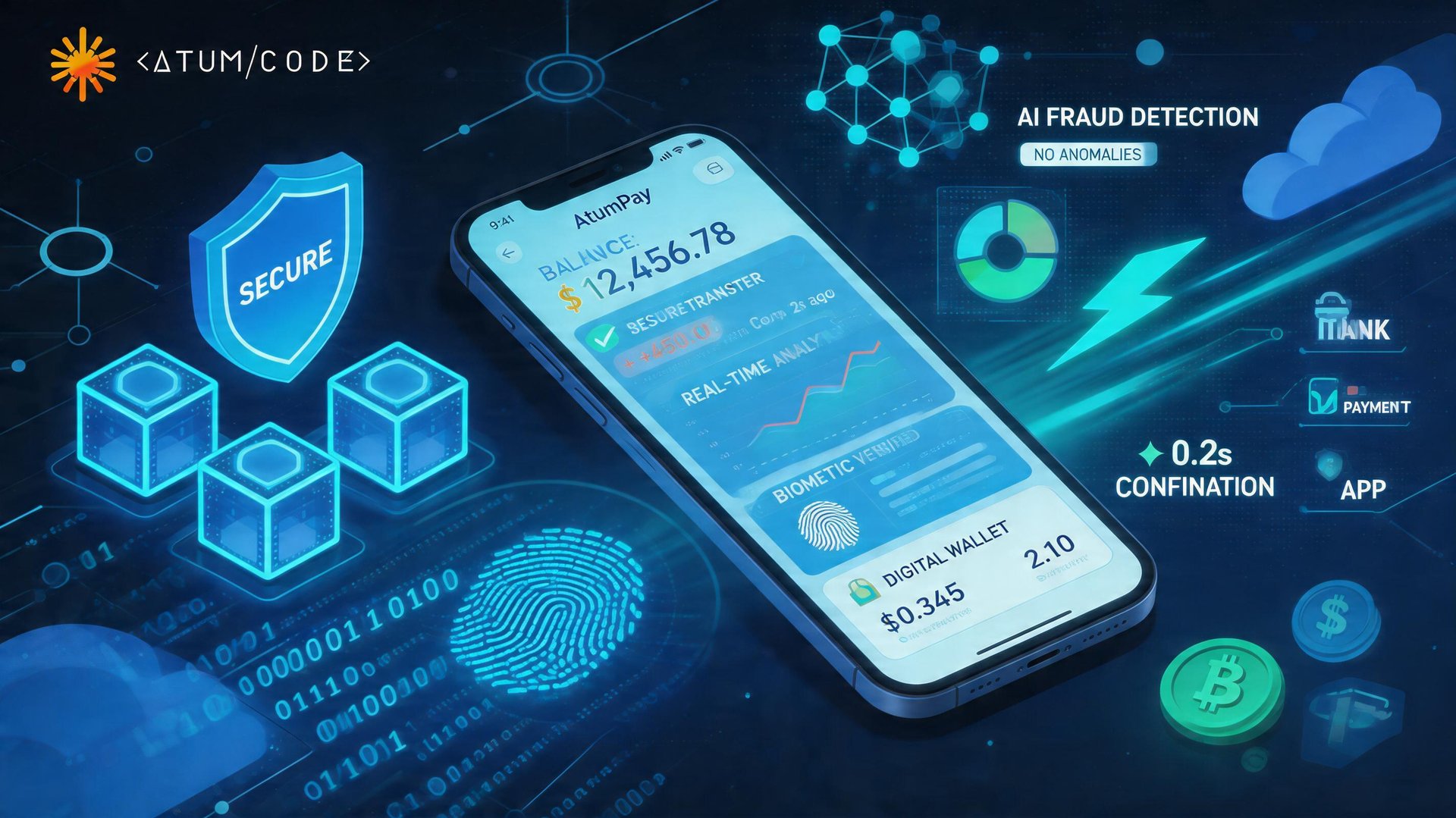
FinTech apps are evolving rapidly—driven by rising user expectations for speed, security, and seamless digital experiences. Emerging technologies like blockchain, AI-powered fraud detection, and open banking APIs are reshaping how financial platforms operate, making transactions faster, smarter, and more transparent. In this blog, we explore the future of FinTech applications and how advanced technologies are enabling secure, scalable innovation. Learn why robust architecture and secure development practices are critical—and how AtumCode builds next-generation FinTech apps designed for performance, compliance, and trust.
FINTECHCUSTOM SOFTWARE DEVELOPMENTMOBILE APP DEVELOPMENTAI
Akshay T.
4/21/20268 min read
Introduction to Fintech Apps: A Brief Overview
The term fintech, which combines "financial technology," refers to the innovative applications and platforms designed to improve and automate the delivery of financial services. Over the past decade, fintech apps have evolved significantly, transitioning from rudimentary banking applications to sophisticated platforms that offer a wide variety of financial services to consumers and businesses.
Historically, these applications began as simple tools for basic transactions, such as online banking and money transfers. However, technological advancements have paved the way for the development of more complex functionalities, including budgeting, investing, lending, and personal finance management. The rise of smartphones and mobile internet has created an opportunity for fintech apps to thrive, as consumers increasingly demand accessible financial solutions that fit their fast-paced lifestyles.
Several factors contribute to the growth of fintech apps. Firstly, the shift towards digital solutions is driven by an increasingly tech-savvy population that values convenience and speed. Consumers prefer using apps that enable them to manage their finances efficiently without needing to visit traditional banks. Secondly, enhanced accessibility has played a critical role; fintech apps often eliminate geographical barriers and provide services to underbanked populations worldwide.
Additionally, the integration of cutting-edge technologies, such as artificial intelligence (AI) and blockchain, has further fueled the expansion of fintech. These advancements not only enhance the user experience but also improve security, making transactions safer and more reliable. The ongoing development and adoption of fintech apps signify a transformative phase in the financial industry, setting the stage for increased competition and consumer empowerment.
Emerging Technologies in Fintech: Blockchain and Beyond
Blockchain technology is increasingly recognized as a foundational element of the financial technology (fintech) landscape. This decentralized digital ledger enhances the security, transparency, and efficiency of financial transactions, positioning it as a transformative force within the industry. Central to the value proposition of blockchain in fintech is its ability to minimize fraud risks and streamline processes that have historically been cumbersome.
In traditional financial systems, transactions often involve multiple intermediaries, which can lead to delays and added costs. Blockchain mitigates this issue by providing a peer-to-peer network where transactions are verified by consensus among participants. This not only accelerates transaction speed but also reduces the costs associated with intermediaries, making fintech applications more competitive and accessible.
Moreover, blockchain facilitates transparency by enabling all participants to access the same immutable records in real time. This real-time access fosters trust amongst users, eliminating the need for reconciliation and oversight that can often plague conventional banking processes. The implications of this transparency are significant, especially in areas such as fraud prevention and compliance with regulatory frameworks.
The potential of blockchain extends beyond transactional efficiency; it also paves the way for innovative financial products. For instance, smart contracts, which are self-executing contracts with the terms directly written into code, can automate and enforce agreements without the need for intermediaries. This capability can revolutionize sectors such as asset management and insurance, simplifying operations and reducing administrative burdens.
As fintech continues to evolve, the integration of blockchain technology stands out as a catalyst for developing innovative solutions that meet the demands of modern consumers. By improving transaction security and fostering a transparent ecosystem, blockchain technology is set to redefine the financial landscape. The potential applications are vast and, when combined with other emerging technologies, could lead to a new wave of financial innovations.
AI and Machine Learning: The New Age of Fraud Detection
In the rapidly evolving landscape of fintech applications, the integration of artificial intelligence (AI) and machine learning is proving to be a game changer, particularly in the area of fraud detection. As digital transactions become ubiquitous, the potential for fraud has increased, making it crucial for financial institutions to adopt sophisticated methods to secure their systems.
AI algorithms are now being utilized to analyze vast amounts of transaction data in real-time. By leveraging historical transaction patterns, these algorithms are able to identify anomalies that could suggest fraudulent activity. For instance, if a user typically makes small transactions in their local area, a sudden large purchase made from a different geographical region can trigger a fraud alert. This not only enhances security but also improves the customer experience, as legitimate transactions can be quickly verified.
Moreover, the continual learning capabilities of machine learning enhance the effectiveness of these fraud detection systems. As the algorithms process more data, they adapt and refine their patterns, leading to increasingly accurate detection rates. This adaptability is vital in keeping pace with evolving fraudulent tactics. Additionally, machine learning models can be trained on various datasets; this includes not only transaction data but also behavioral data that gives insights into user habits, thereby improving the precision of fraud prevention.
Customer verification processes are also benefiting from AI advancements. Biometric verification—such as facial recognition and fingerprint scanning—has become commonplace, adding an extra layer of security. AI systems can instantly evaluate biometric data, significantly reducing the time required for user verification while enhancing security protocols overall.
Thus, the integration of AI and machine learning in fintech applications not only fortifies fraud detection strategies but also promotes faster transaction processes and a better user experience. As technology progresses, we can expect these capabilities to become more sophisticated, ensuring the security and trustworthiness of digital financial transactions.
Open Banking APIs: Redefining Financial Services
Open banking is a transformative concept that has been gaining traction in the financial sector. It refers to the practice of sharing financial data between banks and third-party service providers through Application Programming Interfaces (APIs). This collaborative ecosystem allows for improved financial services by enabling consumers to connect their bank accounts to a variety of applications, from budgeting tools to payment processing services. By leveraging open banking, consumers can enjoy a level of control and personalization that was previously unattainable.
One of the most significant benefits of open banking is the increase in competition within the financial services industry. By allowing third-party applications to access bank data, new entrants can offer innovative solutions that challenge traditional banking models. This competition drives improvements in service quality, as existing institutions are compelled to enhance their offerings to retain customers. As a result, consumers end up with better choices, lower fees, and enhanced functionalities that cater to their specific financial needs.
Moreover, open banking fosters better customer experiences by enabling personalized financial products. For example, lenders can use shared data to assess a borrower's creditworthiness more effectively, leading to tailored loan offers that reflect individual circumstances. Similarly, budgeting apps can provide targeted suggestions based on users’ transaction histories, helping them manage their finances more efficiently. These applications highlight how open banking APIs can create a more user-centric financial environment.
However, the implementation of open banking comes with security implications that require careful consideration. As consumer data is shared among various platforms, it is crucial to prioritize robust security measures to protect sensitive information. Financial institutions and third-party providers must comply with stringent regulations and adopt advanced security protocols to mitigate risks associated with data breaches and identity theft. Overall, the advancement of open banking APIs represents a significant shift in how financial services are delivered, encouraging innovation while demanding accountability.
Ensuring Security in Fintech Apps: Best Practices
As the fintech sector continues to grow, the importance of security in financial technology applications cannot be overstated. With increasing reliance on these apps for sensitive transactions and personal data handling, it is imperative that developers implement rigorous security measures. Adopting best practices in the design and development process is essential to protect user data and comply with regulatory standards.
One of the foundational practices in securing fintech apps is the use of strong encryption. By encrypting data both in transit and at rest, developers can safeguard sensitive information from unauthorized access. This ensures that even if data is intercepted, it would remain unreadable without the appropriate decryption keys. Additionally, utilizing encryption protocols like HTTPS for data communication safeguards user privacy and builds trust.
Another crucial aspect of securing fintech applications is implementing two-factor authentication (2FA). This adds an extra layer of security by requiring users to provide two forms of identification before accessing their accounts. Whether through SMS, email, or authentication apps, 2FA significantly reduces the likelihood of unauthorized access, thus enhancing user protection.
Regular security audits stand as a best practice that cannot be overlooked. Conducting these audits helps identify vulnerabilities and potential threats within the application. By routinely assessing security measures, developers can ensure that the fintech apps comply with industry regulations and standards, which are constantly evolving. This proactive approach not only strengthens security but also demonstrates a commitment to maintaining the highest standards of user safety.
In summary, ensuring security in fintech applications necessitates implementing best practices such as robust encryption, two-factor authentication, and conducting regular security audits. By prioritizing these strategies, developers can significantly enhance user trust while ensuring compliance with relevant security regulations.
Speed and User Experience: The Driving Forces Behind Fintech Adoption
The landscape of fintech applications is rapidly evolving, with speed and user experience emerging as paramount elements influencing consumer adoption. Today's consumers expect their financial services to operate with unparalleled efficiency. This expectation necessitates that fintech developers prioritize not only the speed of transactions but also the overall fluidity of user interactions. A delay of even a few seconds can lead to increased frustration and potential abandonment, making speed a non-negotiable aspect of fintech operations.
User experience (UX) encapsulates the overall satisfaction a consumer derives from an app’s interface and functionalities. A user-friendly design promotes navigation ease, allowing users to complete transactions swiftly without unnecessary complexity. Intuitive designs help in minimizing the learning curve associated with new applications, enabling even non-technical users to engage confidently with fintech platforms. Therefore, investing in high-quality UX design is fundamental in retaining users and encouraging their loyalty.
Moreover, responsive customer service plays a crucial role in enhancing user experience within fintech applications. Users must feel supported at every turn, and accessible, efficient customer service can alleviate concerns or queries that arise while using the app. Incorporating chatbots and live customer support into the app strengthens user trust and satisfaction, suggesting that organizations should not overlook these elements when developing a fintech application.
As competition in the fintech space intensifies, prioritizing speed and user experience will distinguish successful applications from those that fail to capture market interest. Simplifying processes and providing rapid solutions can catalyze the adoption of fintech applications, thus securing a substantial user base in this dynamic sector.
Looking Ahead: The Future of Fintech Apps
The fintech landscape is rapidly evolving, driven by technological advancements, changing consumer expectations, and increasingly complex regulatory environments. As we look ahead, several trends are expected to shape the future of fintech applications, fostering innovative solutions that prioritize user experience, security, and accessibility.
One of the most significant advancements on the horizon is the integration of artificial intelligence (AI) and machine learning. These technologies will enhance the personalization of financial services, allowing fintech apps to offer tailored advice and products based on individual user behavior. Predictive analytics will empower companies to anticipate market trends and customer needs, which could lead to more efficient services and improved customer satisfaction.
Additionally, the rise of decentralized finance (DeFi) is poised to disrupt traditional financial systems. By leveraging blockchain technology, fintech apps can facilitate peer-to-peer transactions, eliminating the need for intermediaries. This not only enhances security but also increases transaction speed, making financial services more accessible to a broader audience.
Consumer expectations are also evolving, with an increasing demand for seamless and convenient experiences. As users become more tech-savvy, they seek intuitive interfaces that provide fast and efficient financial management tools. In response, developers must focus on creating user-friendly apps that streamline the financial experience while ensuring robust security measures are in place to protect sensitive information.
Moreover, regulatory changes will play a crucial role in shaping the future of fintech. Governments are increasingly focusing on consumer protection and data privacy, which may result in stricter compliance measures. Fintech companies that prioritize regulatory adherence will build trust with consumers while also ensuring that their innovations are sustainable in the long term.
In conclusion, the future of fintech apps is set to be characterized by technological advancements, changing consumer preferences, and a dynamic regulatory landscape. By capitalizing on these trends, fintech companies can innovate and adapt, ultimately improving the financial lives of users worldwide.
Connect With Us
Your partner in custom software solutions and design.
Innovate Today, Reach Out!
contact@atumcode.com
+1 202 292 4041
+91 801 091 1708
© 2026. All rights reserved.
Warje, Pune 411058, Maharashtra, India

AtumCode Solutions Pvt. Ltd.
Beyond Code, Building Vision!
D&B D-U-N-S Number : 76-637-9675