
Edge Computing in Mobile Apps: Faster Experiences for Users
As user expectations for speed and responsiveness grow, edge computing is emerging as a powerful solution for modern mobile applications. By processing data closer to the user rather than relying solely on centralized cloud servers, edge computing significantly reduces latency and improves real-time performance. In this blog, we explore how edge computing enhances mobile app speed, reliability, and user experience—especially for data-intensive use cases like IoT, AR/VR, and real-time analytics. Discover how AtumCode builds next-generation mobile apps optimized for low latency and high performance.
BACKEND DEVELOPMENTCUSTOM SOFTWARE DEVELOPMENTAICLOUDIOT
Srushti M.
4/1/20267 min read
Understanding Edge Computing
Edge computing is a distributed computing paradigm that brings computation and data storage closer to the sources of data generation. Unlike traditional cloud computing, which relies heavily on centralized data centers, edge computing processes data at the network's periphery. This architectural shift is crucial for managing large volumes of data generated by mobile devices, IoT devices, and other sensors. By placing data processing capabilities at the edge, businesses can significantly reduce latency, enhance the speed of data retrieval, and improve the overall user experience.
At its core, edge computing enables devices to perform data analyses locally rather than sending everything to a distant cloud server. This is particularly important in scenarios requiring real-time processing, such as mobile applications that depend on quick responses for features like augmented reality, real-time video analysis, or interactive gaming. By processing data nearer to the user, edge computing minimizes the time delays typically associated with cloud processing.
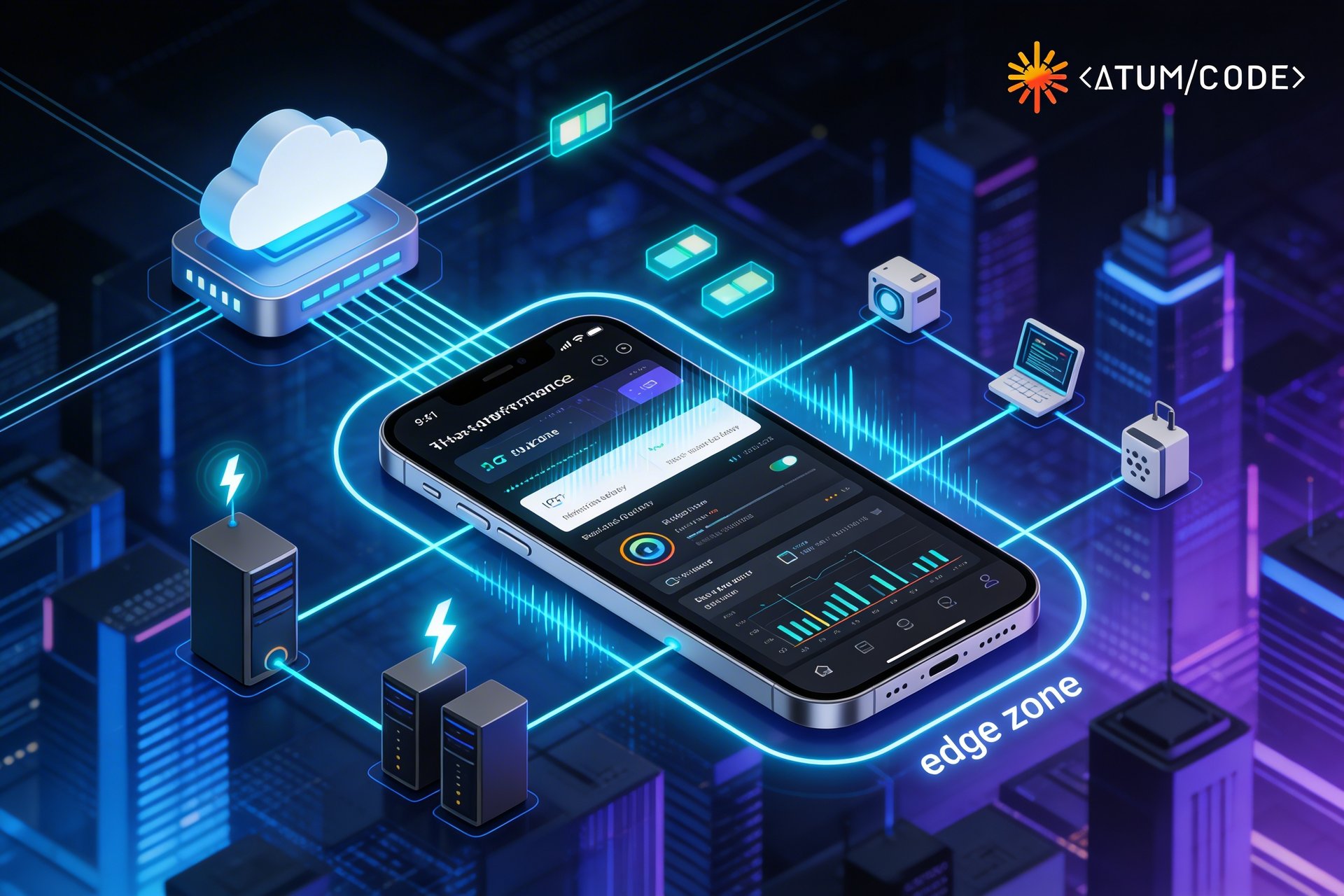
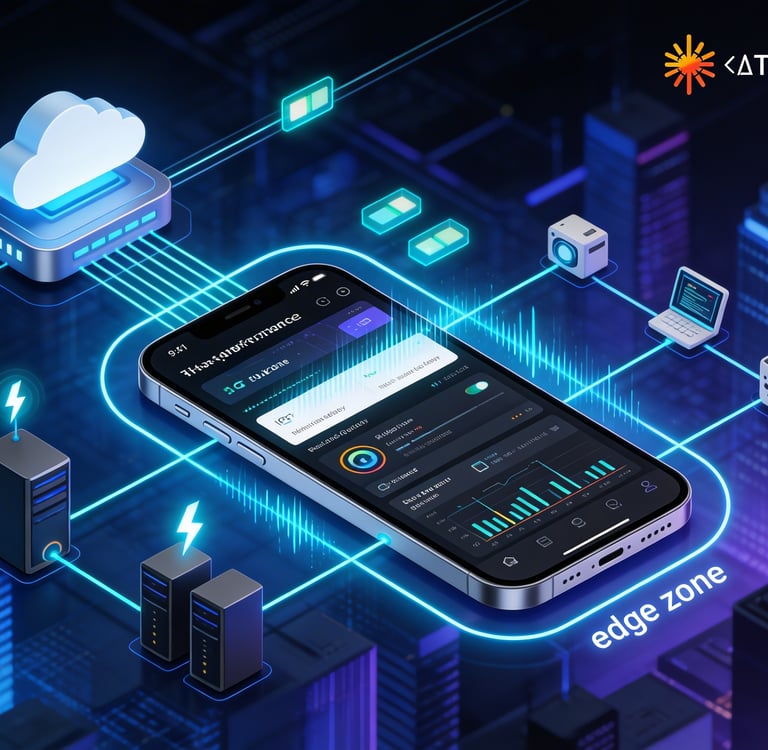
Moreover, edge computing's architecture comprises various elements, including edge devices, edge nodes, and network connectivity. Edge devices, such as smartphones or IoT sensors, collect data, while edge nodes—typically local servers or gateways—process this data. The result is a more efficient data handling process that not only alleviates pressure on the centralized cloud storage but also optimizes bandwidth usage and enhances privacy. As data security becomes increasingly paramount, edge computing allows sensitive information to be analyzed locally, reducing the risk of exposure during transmission.
This innovative approach fundamentally transforms how mobile applications operate, providing a framework that supports faster, more reliable, and user-friendly experiences. Understanding the principles and benefits of edge computing is vital for developers looking to harness its potential in creating advanced mobile functionalities.
The Need for Speed: Latency in Mobile Applications
Latency refers to the delay or lag involved in the transfer of data between devices and servers. In the realm of mobile applications, this can significantly impact the user experience. High latency results in noticeable delays, making tasks feel sluggish and frustrating. As mobile devices become more ubiquitous, the expectation of instantaneous performance grows. Users have little tolerance for slow apps, making latency a critical factor for developers to address.
For instance, consider a mobile shopping application. When a user clicks on a product image, they expect to see an enlarged version almost immediately. If it takes several seconds to load, the user might abandon their shopping session, potentially resulting in lost sales. Similarly, in social media applications, a delay when loading new posts can lead to dissatisfaction. Users are accustomed to real-time updates, and any latency disrupts their experience.
Latency impacts various facets of mobile app interactions, including loading times, data synchronization, and responsiveness to user inputs. In gaming applications, even a few milliseconds of latency can mean the difference between winning and losing, directly affecting player engagement and satisfaction. Moreover, applications dependent on augmented reality (AR) or virtual reality (VR) operate on the principle of seamless interaction; any noticeable lag can lead to user discomfort and disengagement.
Understanding the need for speed is not merely a technical concern, but a strategic necessity. Developers must continuously work towards minimizing latency through optimized code, efficient data handling, and leveraging edge computing solutions. This technology allows data processing to occur closer to the user, thus reducing the distance that information must travel and significantly enhancing app performance. Addressing latency is essential for ensuring that users remain satisfied, engaged, and willing to continue using mobile applications.
How Edge Computing Works in Mobile Apps
Edge computing fundamentally transforms the performance of mobile applications by facilitating data processing closer to the source of data generation. In contrast to traditional cloud computing, which relies on centralized data centers that may be located far from the end user, edge computing locates resources and processing capabilities at the "edge" of the network, such as on user devices or nearby servers. This architecture minimizes latency and enhances user experience by enabling faster data processing and response times.
When a mobile app utilizes edge computing, data generated by the app—such as user interactions, sensor data, or location information—is processed locally on the device or on a nearby edge server. For instance, a mobile gaming app can render graphics or calculate game physics using the processing power of the smartphone itself, instead of sending the data back to a distant cloud server. This localized processing significantly decreases the time it takes to deliver a response to the user, creating a more fluid experience.
Moreover, edge computing facilitates more efficient bandwidth usage, as only essential information needs to be communicated over the network. This is especially crucial for applications requiring real-time feedback, such as video streaming, augmented reality (AR), or real-time analytics. By processing data near its source, mobile apps can dynamically react to user input without the delays associated with relying on centralized cloud systems.
Additionally, edge computing supports improved scalability for mobile applications. As the amount of data generated increases, edge networks can seamlessly manage and process this data without overwhelming centralized servers. This scalability ensures that users continue to enjoy optimal performance even as demand on resources changes.
Benefits of Edge Computing for Mobile Users
Edge computing has emerged as a transformative technology that offers numerous advantages for mobile app users. One of the most significant benefits is reduced latency. By processing data closer to the end-user, edge computing minimizes the time it takes for data to travel between the device and the server. This localized processing leads to quicker response times, which is especially important for applications requiring real-time interactions, such as gaming and video conferencing.
Another key benefit of edge computing is improved reliability. Traditional cloud computing heavily relies on centralized data centers, which can be vulnerable to outages and network failures. Edge computing mitigates this risk by distributing data processing across various nodes in proximity to users. This decentralized approach enhances availability, ensuring that users experience fewer disruptions, even during peak usage times when cloud resources may be overwhelmed.
Additionally, edge computing enhances performance during high-traffic events. Mobile applications often experience spikes in usage, such as during major sporting events or product launches. With edge computing, data transfers can be handled locally, reducing the load on central servers and maintaining optimal performance. For instance, streaming services can stream content smoothly, leveraging edge computing to deliver high-quality video without buffering, even when hundreds of thousands of users are online simultaneously.
Real-world applications demonstrate the effectiveness of edge computing in improving user experiences. For example, the deployment of smart city solutions relies on edge computing to process data from sensors and IoT devices instantaneously, allowing for efficient traffic management and public safety responses. Similarly, augmented reality (AR) applications utilize edge computing to deliver immersive experiences without significant lag, showcasing the advantages of this technology in enhancing mobile app interactions.
Use Cases of Edge Computing in Mobile Applications
Edge computing has emerged as a transformative technology in mobile applications across various industries, facilitating faster and more efficient user experiences. One prominent use case is in the gaming industry. Mobile games increasingly rely on edge computing to minimize latency, providing real-time responses to user actions. By processing data closer to the user instead of relying on distant servers, game developers can enhance interactive experiences, ensuring smoother gameplay and reducing lag during critical moments.
Another significant application is in the Internet of Things (IoT). Mobile applications that connect with IoT devices can benefit from edge computing by processing data at the edge of the network. This efficiency is crucial in scenarios such as smart home applications, where devices communicate in real time. By executing commands locally, users experience immediate responses, whether it is adjusting lighting or temperature settings, contributing to seamless user interactions.
In the healthcare sector, edge computing plays a vital role in mobile applications monitoring patient health in real-time. Wearable devices such as smartwatches and fitness trackers collect health data that is processed locally. In emergencies, this can lead to swift notifications to medical professionals, enabling timely interventions. Furthermore, this local processing reduces the amount of sensitive data sent over the network, enhancing the security and privacy of patient information.
Financial services also leverage edge computing within mobile banking applications. By processing transactions closer to the user, these applications can provide instant notifications and transaction approvals, improving user satisfaction while maintaining robust security measures. Overall, the integration of edge computing across these various sectors illustrates its powerful capabilities in optimizing mobile applications for speed and efficiency, ultimately enriching user experiences.
Challenges of Implementing Edge Computing in Mobile Apps
While edge computing offers numerous benefits for mobile applications, its implementation is not without challenges. A primary concern relates to security. As data is processed closer to the source of generation—often on user devices or local edge servers—the risk of cyber threats can increase. Sensitive information, if not adequately secured, may become vulnerable to attacks, raising significant privacy issues. Developers must implement strong encryption and authentication mechanisms to safeguard data in transit and at rest. Moreover, consistent security updates and patches must be prioritized to maintain a secure environment.
Another considerable challenge pertains to infrastructure costs. Establishing and maintaining an edge computing framework may require substantial investment in both hardware and software resources. Organizations must evaluate whether the potential benefits of reduced latency and increased responsiveness justify the upfront and ongoing costs. This includes costs associated with edge servers, local processing units, and the need for more sophisticated network management tools.
Additionally, integrating edge computing requires a fundamental shift in how mobile applications are architected and developed. This transition may require retraining existing teams or hiring new talent with specialized knowledge in edge technologies. Consequently, organizations must weigh the potential learning curve against the expected advantages of improved performance.
Despite these challenges, the successful implementation of edge computing in mobile applications is achievable with strategic planning and investment. Organizations can overcome security issues through robust practices, and cost implications can often be mitigated over time, reflecting in reduced operational expenses. Thus, while challenges exist, they can be effectively addressed to harness the transformative potential of edge computing.
The Future of Edge Computing in Mobile Applications
The landscape of mobile applications is rapidly evolving as technological advancements continue to redefine user experiences. At the forefront of this evolution is edge computing, which is making significant strides in the mobile app sector. The future of edge computing in mobile applications is poised to enhance performance, security, and user engagement, marking a paradigm shift in how applications function and deliver services.
Emerging trends indicate that as 5G technology becomes more widespread, the reliance on edge computing will increase. This next-generation connectivity will facilitate lower latency, improved bandwidth, and enhanced capacity, enabling mobile applications to process data closer to the user. Such advancements will empower apps to perform complex tasks in real-time, making functionalities like augmented reality (AR) and virtual reality (VR) experiences seamless and more interactive.
Furthermore, the integration of Artificial Intelligence (AI) with edge computing is anticipated to revolutionize the capabilities of mobile applications. By enabling smart applications that can analyze data at the edge, businesses can provide personalized experiences without relying heavily on cloud resources. AI-powered mobile apps can utilize real-time data insights to improve user engagement and satisfaction.
Security will also see advancements in this future landscape, as edge computing can mitigate risks associated with data breaches. By processing sensitive information locally, edge computing reduces the amount of data transmitted over networks, thus minimizing vulnerabilities. Additionally, with the growing concern over privacy, edge computing can help ensure that user information remains more secure.
In conclusion, the future of edge computing in mobile applications promises a transformative impact on the user experience. As trends like 5G and AI integration materialize, the potential for mobile applications to offer faster, more personalized, and secure experiences is immense. Businesses must stay abreast of these developments to leverage edge computing effectively, ensuring their applications remain competitive in an ever-evolving digital landscape.
Connect With Us
Your partner in custom software solutions and design.
Innovate Today, Reach Out!
contact@atumcode.com
+1 202 292 4041
+91 801 091 1708
© 2026. All rights reserved.
Warje, Pune 411058, Maharashtra, India

AtumCode Solutions Pvt. Ltd.
Beyond Code, Building Vision!
D&B D-U-N-S Number : 76-637-9675