
Building AI-Powered SaaS Platforms for the Next Decade
SaaS platforms are entering a new era—powered by artificial intelligence. From workflow automation and predictive analytics to hyper-personalized user experiences, AI is transforming traditional SaaS products into intelligent, self-optimizing systems. In this blog, we explore how AI integration is reshaping SaaS architecture and enabling businesses to deliver smarter, faster, and more scalable solutions. Learn how custom AI-powered SaaS platforms provide a powerful competitive advantage—and how AtumCode builds future-ready platforms designed for the next decade of innovation.
CUSTOM SOFTWARE DEVELOPMENTMOBILE APP DEVELOPMENTWEB DEVELOPMENTAI
Srushti M.
4/14/20268 min read
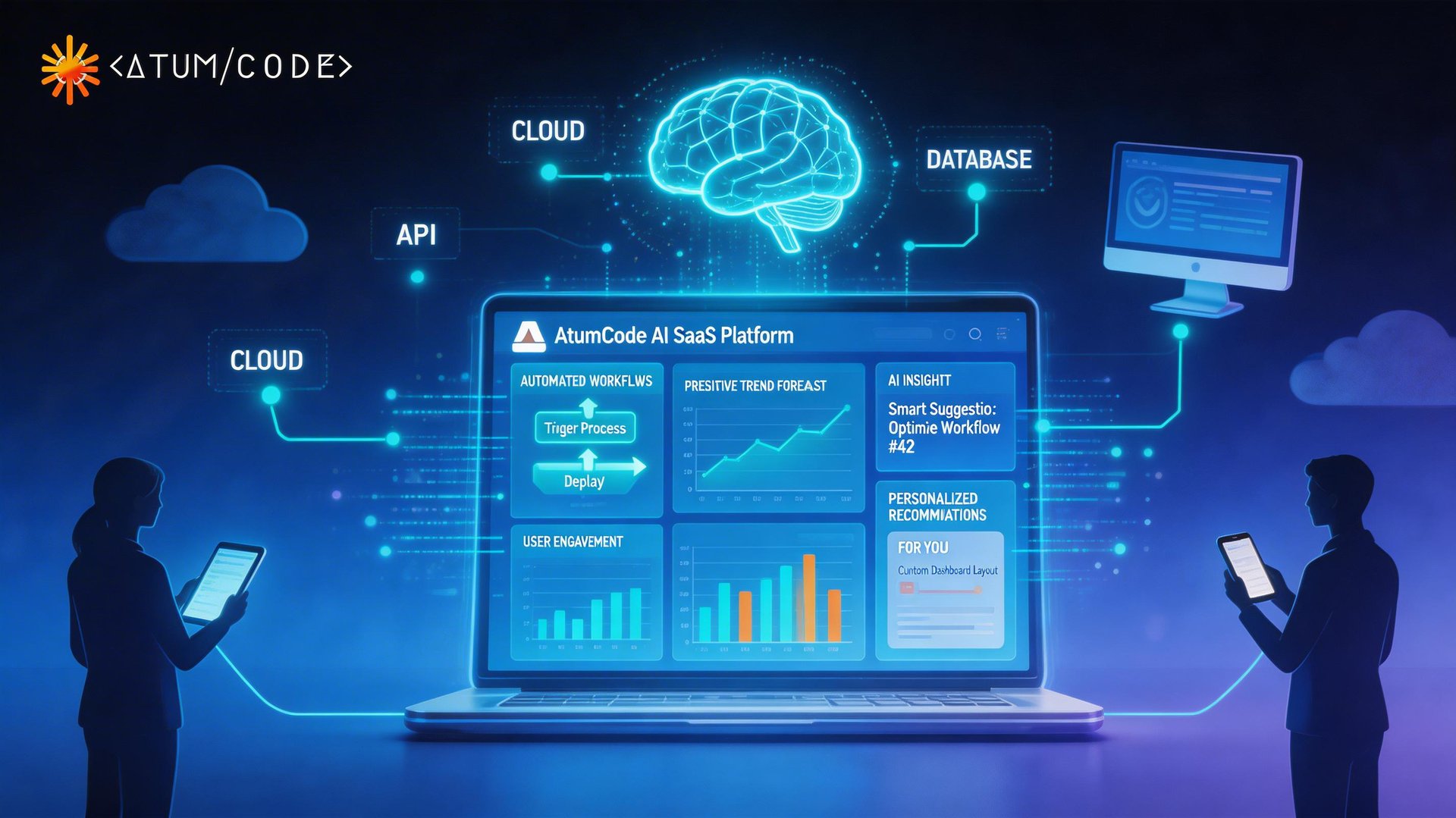
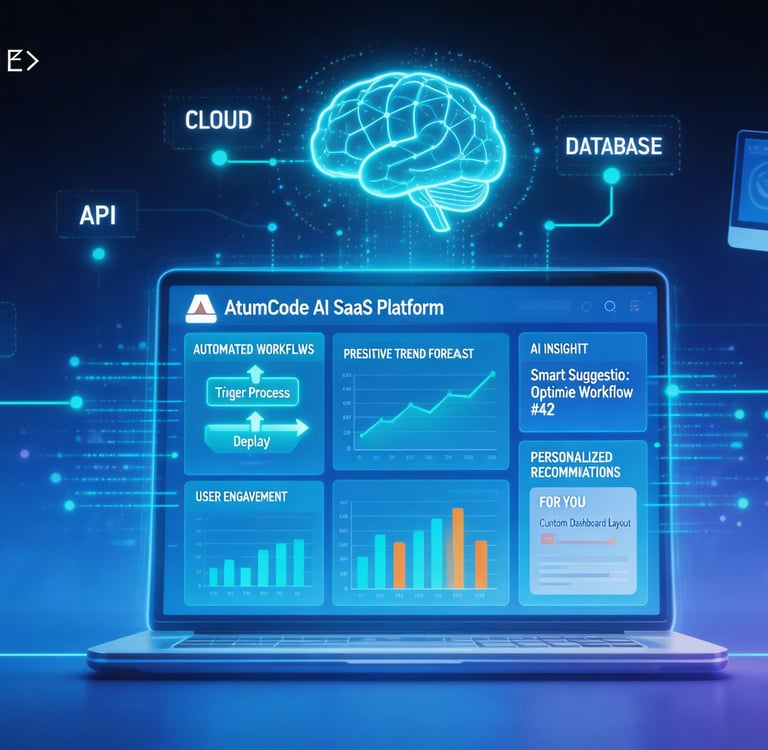
Introduction to AI in SaaS
Software as a Service (SaaS) has transformed how businesses deploy and manage applications, offering solutions that can be accessed via the internet without the hassle of complex installations. This model is particularly beneficial for organizations seeking flexibility and scalability in their technology stack. As industries evolve, the need for advanced functionalities and enhanced user experiences drives the integration of Artificial Intelligence (AI) into SaaS platforms, leading to significant advancements.
AI technologies, encompassing machine learning, natural language processing, and predictive analytics, are being harnessed to enhance SaaS applications. The introduction of these intelligent systems allows for improved data processing and insights, enabling businesses to make more informed decisions. For instance, AI can analyze vast amounts of data in real-time, highlighting trends and anomalies that human analysis may overlook. This capability directly impacts business operations, allowing for increased efficiency and reduced operational costs.
The role of AI in SaaS goes beyond mere operational enhancements; it fundamentally reshapes business strategy. With the ability to automatically customize and adapt services based on user behavior, AI-driven SaaS solutions foster personalized experiences for end-users. This level of customization not only increases user satisfaction but also leads to higher engagement and retention rates. Moreover, organizations can leverage AI tools for improved customer support, predictive maintenance, and enhanced security measures, which are vital as data breaches and cyber threats become more prevalent.
In essence, the integration of AI within the SaaS framework is setting a new standard for businesses across various sectors. As we move deeper into the digital age, the relevance of AI-powered SaaS platforms will be indispensable, shaping how companies operate and compete on a global scale.
Key Benefits of AI Integration
Integrating artificial intelligence (AI) into Software as a Service (SaaS) platforms offers a multitude of advantages that can significantly enhance the operational efficiency and effectiveness of businesses. The pivotal benefits include automation, enhanced analytics, and improved personalization.
Automation stands out as one of the most significant benefits of AI integration in SaaS solutions. By automating routine tasks, businesses can eliminate manual effort, reduce human error, and free up valuable time for their employees. For instance, AI-driven chatbots provide 24/7 customer support, handling common inquiries and allowing human agents to focus on more complex issues. According to a report by McKinsey, automation can lead to a productivity increase of 20 to 25%, illustrating how AI can transform workflow efficiency.
Enhanced analytics is another critical advantage of incorporating AI into SaaS platforms. With AI's ability to process vast amounts of data quickly, businesses can gain deeper insights into customer behaviors and preferences. Advanced machine learning algorithms can analyze patterns and trends that may not be immediately apparent, enabling organizations to make data-driven decisions. A survey by Deloitte found that companies utilizing AI-driven analytics experience 9% higher revenue growth compared to their counterparts.
Additionally, improved personalization is increasingly important in today's competitive landscape. AI allows SaaS platforms to tailor user experiences based on individual preferences and behaviors. For example, Netflix uses AI algorithms that analyze viewing habits to recommend content specifically tailored to each user, resulting in increased engagement and customer satisfaction. Research from Evergage indicates that 88% of marketers consider personalization a critical part of their strategy, emphasizing the growing importance of AI-enhanced personalization.
In conclusion, the integration of AI into SaaS platforms fundamentally reshapes how businesses operate by streamlining processes through automation, providing richer insights via enhanced analytics, and fostering customer loyalty through improved personalization. Embracing these benefits can position organizations for success in the coming decade.
The Evolution of SaaS with AI Capabilities
Software as a Service (SaaS) has undergone significant transformation since its inception in the early 2000s. Initially, SaaS provided businesses with cloud-based applications that eliminated the need for on-premise installations, offering improved accessibility and reduced maintenance costs. Over time, advancements in cloud computing and internet bandwidth facilitated the emergence of more complex applications, allowing SaaS providers to deliver integrated solutions tailored to various business needs.
The introduction of AI capabilities marked a paradigm shift within the SaaS landscape. Initially, SaaS platforms focused on straightforward functionalities, often emphasizing data storage and basic operational tools. However, as algorithms evolved and machine learning became more prevalent, AI began to enhance the capabilities of SaaS solutions significantly. Notable milestones include the development of intelligent CRM systems that utilize predictive analytics to forecast customer behavior and engagement, enhancing user experience through personalized service.
Another key development in the evolution of SaaS with AI capabilities is the integration of automation features. AI-driven automation has enabled businesses to streamline various processes, such as customer support and data analysis, thus improving overall efficiency. The incorporation of natural language processing in SaaS platforms has transformed customer interactions by allowing users to engage with applications through conversational interfaces.
Furthermore, the advent of AI in SaaS has facilitated advanced data insights and analytics. With the capabilities of AI, SaaS applications can analyze vast amounts of data in real-time, providing organizations with valuable insights that drive strategic decision-making. As industries continue to embrace digital transformation, the synergy of AI and SaaS is set to redefine the operational landscape, leading to enhanced adaptability and predictive capabilities.
Automation in SaaS: Streamlining Processes
In recent years, Software as a Service (SaaS) platforms have increasingly integrated artificial intelligence (AI) to enhance automation capabilities. The ability to automate various tasks and functions not only streamlines operations but also enhances productivity and reduces operational costs for businesses. AI-driven automation can profoundly impact different areas of SaaS, from customer service to data management, creating robust solutions that cater to the needs of modern enterprises.
One of the most notable applications of AI in SaaS is in customer relationship management (CRM) systems. AI can automate data entry and lead scoring processes, allowing sales teams to focus on high-priority leads. For instance, Natural Language Processing (NLP) algorithms can analyze customer interactions and automatically categorize customer inquiries, thereby directing them to the appropriate department. This not only reduces response time but also increases customer satisfaction.
Additionally, AI can facilitate automated reporting and analytics. SaaS platforms equipped with machine learning algorithms can process vast amounts of data to generate insights automatically. This capability enables organizations to make data-driven decisions without manual intervention, providing timely visibility into business performance targets. Predictive analytics, powered by AI, can also anticipate trends and help businesses align their strategies effectively.
Moreover, AI-driven chatbots provide unprecedented automation in customer support. These bots can handle routine inquiries, troubleshoot common issues, and offer instant assistance at any time. By taking care of repetitive tasks, AI chatbots free up human agents to focus on more complex queries, thus improving overall service efficiency.
In conclusion, the integration of AI into SaaS platforms has revolutionized automation processes across various business functions. From optimizing customer interactions to improving analytical capabilities, AI facilitates a more streamlined and efficient operational environment. As businesses continue to adopt these technologies, the importance of automation in SaaS will only grow, paving the way for innovative solutions that meet evolving market demands.
Analytics Revolution: AI-Driven Insights
As organizations continue to navigate the complexities of the digital landscape, the role of analytics within Software as a Service (SaaS) platforms has become increasingly important. Artificial Intelligence (AI) enhances the capabilities of analytics, enabling companies to derive actionable insights from vast amounts of data. Through technologies such as predictive analytics and real-time data processing, AI transforms raw data into valuable information that can significantly influence business decisions.
Predictive analytics, powered by AI algorithms, allows organizations to anticipate future trends based on historical data. By identifying patterns and correlations that are often overlooked by traditional analytics methods, predictive models can forecast outcomes with remarkable accuracy. This capability is crucial for businesses aiming to stay ahead of competition and effectively allocate resources. For instance, e-commerce platforms can leverage predictive analytics to optimize inventory management, ensuring they stock products that are in demand based on consumer behavior.
In addition to predictive capabilities, AI enhances real-time data processing, allowing for instantaneous analysis of incoming information. This immediacy enables businesses to respond rapidly to market changes or customer inquiries, improving overall customer experience. AI-driven analytics can monitor data streams, highlighting anomalies or trends as they occur, thus empowering companies to make informed decisions promptly. Moreover, the implementation of machine learning technologies enables continuous learning from new data, further refining predictions and insights over time.
Machine learning methods are at the forefront of this analytics revolution. These techniques facilitate the development of algorithms that evolve with input data, thus enhancing their accuracy and efficiency. By automating the analysis process, businesses can focus more on strategic planning and less on the minutiae of data interpretation. Collectively, these advancements underscore the critical role of AI in transforming the analytics landscape within SaaS platforms, driving smarter, data-driven business decisions.
Personalization: Creating Customized User Experiences
As businesses increasingly adopt Software as a Service (SaaS) platforms, the need for personalized user experiences becomes paramount. Artificial Intelligence (AI) plays a pivotal role in enabling SaaS applications to tailor their features and interactions based on individual user preferences and behaviors. One of the key techniques employed for personalization is recommendation systems, which analyze user data to suggest relevant content, products, or services. These systems leverage machine learning algorithms to understand patterns in user behavior, allowing SaaS platforms to enhance user engagement and satisfaction.
In addition to recommendation systems, AI-equipped SaaS platforms utilize behavioral analysis to further refine user experiences. By examining user interactions with the application, such as click patterns and navigation behaviors, the platform can identify trends and preferences. This information allows the system to adjust its offerings dynamically, ensuring that users receive the most applicable content and functionalities at any given time.
The integration of natural language processing (NLP) within SaaS platforms is also notable. NLP tools can analyze user queries, feedback, and other textual interactions to provide more pertinent responses, thereby deepening the level of engagement. As users communicate through various channels, AI can learn from these communications, creating a feedback loop that consistently improves the personalization process.
Moreover, AI-driven personalization approaches extend beyond just surface-level adjustments. They include predictive analytics, which forecasts future user behaviors based on historical data. This capability allows SaaS platforms to proactively address user needs, ensuring that they remain relevant in a competitive market.
Building Custom AI-Powered Platforms for Competitive Advantage
In the modern business landscape, the integration of artificial intelligence (AI) into software as a service (SaaS) platforms is not merely an option but a necessity for companies aiming to distinguish themselves. Custom AI-powered platforms can provide firms with tailored solutions that align precisely with their operational needs, customer preferences, and market demands. This level of customization is essential in achieving a sustainable competitive advantage.
One significant benefit of building custom AI-powered SaaS solutions lies in their ability to offer unique functionalities that generic platforms may lack. By leveraging proprietary algorithms and data analytics capabilities, businesses can create a product that resonates with their target audience. For instance, companies in sectors such as finance, healthcare, and e-commerce can utilize machine learning models to analyze user behavior and predict future trends. This level of insight can lead to improved decision-making processes and more effective customer engagement strategies.
Moreover, custom AI-powered platforms facilitate enhanced operational efficiency by automating repetitive tasks and optimizing resource allocation. Businesses can leverage AI for predictive maintenance, supply chain management, and customer service automation, significantly reducing operational costs and improving service delivery. These efficiencies can be critical in retaining customers and attracting new clients, thereby bolstering a company's market position.
Additionally, the ability to integrate various data sources into a single, cohesive platform enables businesses to gain a 360-degree view of their operations. This holistic perspective empowers organizations to respond swiftly to market changes, pivot strategies effectively, and remain relevant amidst competition. By investing in custom AI-powered SaaS solutions, companies not only elevate their operational capabilities but also enhance their brand identity as innovative leaders in their respective industries.
In summary, the strategic implementation of custom AI-powered platforms is pivotal for businesses seeking long-term success. By harnessing the unique capabilities offered by AI, companies can tailor their services, improve operational processes, and ultimately achieve a distinct competitive edge in a rapidly evolving market.
Connect With Us
Your partner in custom software solutions and design.
Innovate Today, Reach Out!
contact@atumcode.com
+1 202 292 4041
+91 801 091 1708
© 2026. All rights reserved.
Warje, Pune 411058, Maharashtra, India

AtumCode Solutions Pvt. Ltd.
Beyond Code, Building Vision!
D&B D-U-N-S Number : 76-637-9675