
How AI is Transforming Customer Experience in Mobile Apps
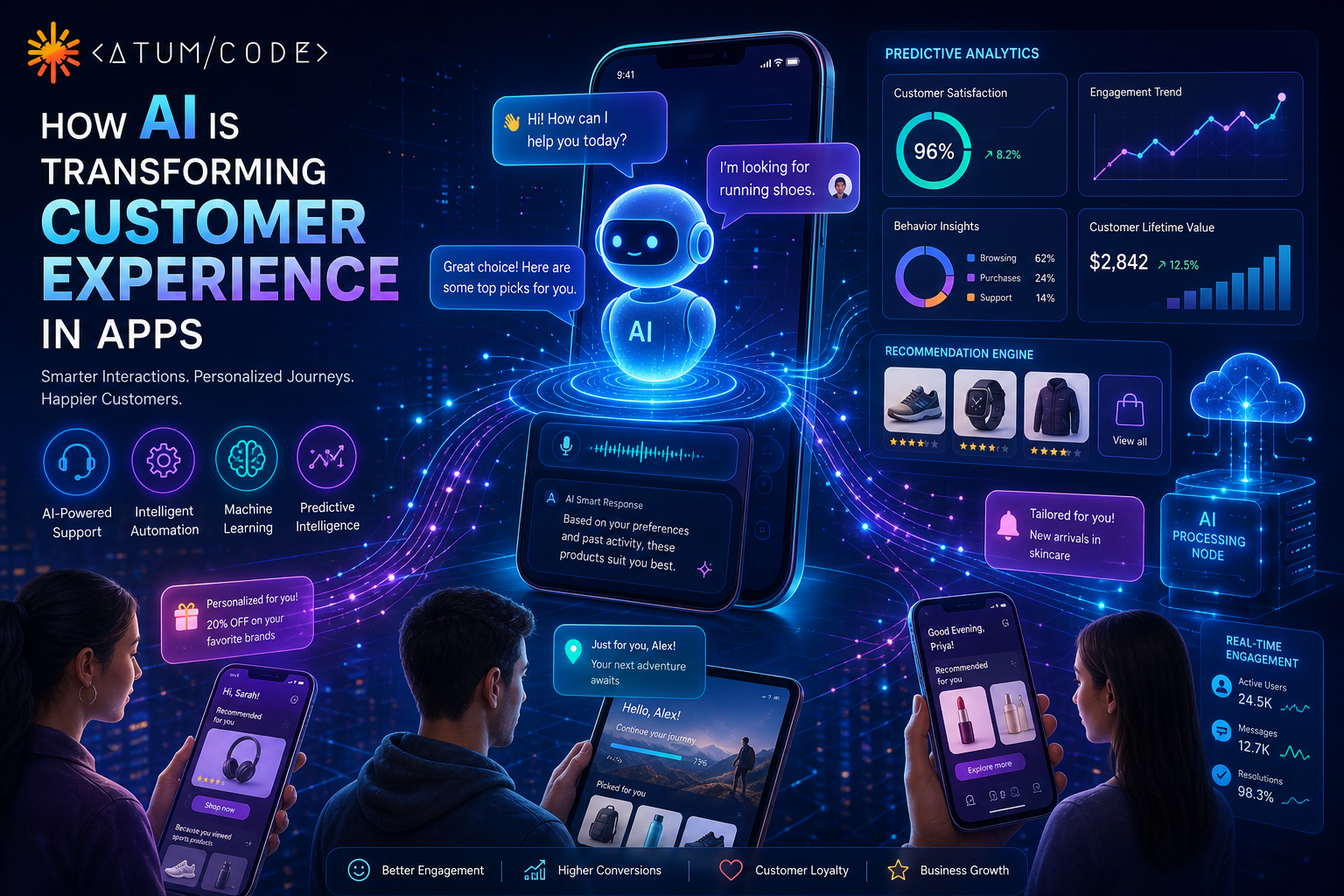
Artificial Intelligence is redefining customer experience in modern mobile and web applications. From AI-powered chatbots offering instant support to predictive analytics that anticipate user behavior and personalized journeys tailored to individual preferences, AI enables businesses to create smarter, more engaging digital experiences. In this blog, we explore how AI-driven technologies improve customer engagement, increase retention, and deliver faster, more efficient support. Discover how businesses are leveraging intelligent automation and personalization to build stronger customer relationships—and how AtumCode develops AI-powered applications designed for exceptional user experiences.
AIMOBILE APP DEVELOPMENTCUSTOM SOFTWARE DEVELOPMENT
Akshay T.
5/26/20267 min read
Introduction to AI in Customer Experience
In recent years, Artificial Intelligence (AI) has emerged as a transformative force in various sectors, notably within mobile applications. The integration of AI into mobile apps signifies a shift towards a more personalized and efficient customer experience, addressing the evolving needs and expectations of users. As mobile devices continue to dominate communication and transactions, the importance of enhancing user experience through intelligent solutions cannot be overstated.
AI technologies such as machine learning and natural language processing are increasingly employed to interpret user data, enabling mobile apps to provide tailored recommendations and responses. This capability not only streamlines interactions but also anticipates user preferences, setting the stage for more satisfying and engaging experiences. As businesses seek to differentiate themselves in a competitive marketplace, leveraging AI in mobile applications has become a necessity rather than just an advantage.
The challenge for developers and organizations lies in effectively implementing these AI technologies to create intuitive interfaces and functionalities. This means that app developers must possess a deep understanding of user behavior and preferences, utilizing data analytics to refine AI algorithms continuously. As a result, customer journeys become more seamless, with AI working behind the scenes to enhance real-time user interactions.
This introduction to AI in mobile apps highlights the increasing reliance on technology to elevate customer experience. Understanding the various AI capabilities paves the way to explore specific innovations within the industry, each contributing to a future where user experience is paramount. As we delve deeper into the applications of AI in mobile technology, the potential for enhanced customer engagement becomes increasingly apparent.
The Rise of AI Chatbots
In recent years, the emergence of AI chatbots has marked a significant transformation in mobile app customer experience. These sophisticated tools leverage machine learning and natural language processing technologies to engage users in real-time communication, allowing for more dynamic interactions compared to traditional support channels. By integrating chatbots into mobile applications, businesses have been able to streamline customer support services, offering immediate responses to user inquiries and reducing wait times.
AI chatbots enhance customer support by providing users with 24/7 availability. With the ability to handle a variety of questions, these chatbots can assist users in troubleshooting issues, finding information, or even completing transactions without the need for human intervention. This not only improves response times but also allows human support staff to focus on more complex queries, thereby increasing overall efficiency.
One notable implementation of AI chatbots can be observed in mobile banking apps. For example, leading banks have introduced chatbots that guide customers through account inquiries, facilitate money transfers, and even offer budgeting advice. This shift towards automation has positively impacted customer satisfaction scores, as clients appreciate the convenience and speed with which they can receive assistance.
Moreover, AI chatbots contribute to enhancing user engagement within mobile applications. By personalizing the interaction based on previous user behavior and preferences, chatbots create a more tailored experience for individuals. This personalized approach not only keeps users engaged but also encourages customer loyalty, underscoring the positive implications of integrating AI into mobile app ecosystems. As companies continue to invest in AI chatbot technology, the prospects for improved customer interaction through mobile applications are promising.
Leveraging Predictive Analytics
Predictive analytics has emerged as a significant component within the realm of artificial intelligence (AI), enabling businesses to forecast customer behaviors and preferences with remarkable accuracy. By utilizing historical data, predictive models can identify patterns and trends that help companies better understand their clientele. A variety of data points, including past purchase behaviors, browsing history, and demographic information, contribute to the creation of these models.
The process of developing predictive analytics revolves around machine learning algorithms that analyze the structured and unstructured data collected from various touchpoints. These algorithms examine multiple variables to predict future outcomes. For instance, a retail mobile app may leverage customer purchase data to tailor promotional offers, anticipating which products a user is likely to buy next. This not only drives sales but also fosters customer loyalty by creating a personalized shopping experience.
Furthermore, businesses can enhance customer experiences by integrating predictive analytics into their mobile apps in numerous ways. Insights derived from predictive models allow companies to optimize their offerings, ensuring users receive relevant content and suggestions. For example, streaming services can recommend shows or movies based on viewers' past preferences and engagement levels, maximizing satisfaction. Additionally, scheduling reminders for replenishable products, based on previous order patterns, can encourage repeat purchases.
In summary, the integration of predictive analytics powered by AI in mobile applications not only streamlines offerings but also significantly improves the overall customer experience. By anticipating needs and preferences, businesses can enjoy enhanced customer engagement, retention, and increased revenue growth, highlighting the transformative potential of these advanced technologies.
Creating Personalized User Journeys
In the current landscape of mobile applications, creating personalized user journeys has become critical for enhancing customer satisfaction and retention. AI technologies play a significant role in this transformation by leveraging machine learning algorithms to analyze vast amounts of user data. These algorithms enable mobile apps to identify patterns, preferences, and behaviors displayed by users, which can then be used to tailor experiences specific to individual needs.
One of the primary ways that AI personalizes user journeys is through data analysis. By collecting and processing information such as user interactions, preferences, and feedback, machine learning models can generate insights that inform app developers about what users truly want. For instance, e-commerce applications can employ predictive analytics to recommend products based on a user's previous purchases or browsing history. This not only enhances the shopping experience but also increases the likelihood of conversions.
Furthermore, AI-driven personalization extends beyond mere product recommendations. It also includes customizing the content presented within the app. For example, news applications utilize AI to curate articles that align with an individual user’s interests, ensuring that the content generated remains relevant and engaging. By providing tailored recommendations and personalized content, mobile apps can significantly improve user engagement and satisfaction.
Additionally, AI facilitates proactive customer service by anticipating user needs. Through chatbots and virtual assistants embedded within apps, users can receive immediate assistance that is informed by their interaction history. This proactive approach helps in addressing queries or concerns before they escalate, thereby enhancing the overall customer experience. In conclusion, the integration of AI in mobile applications is not merely a trend, but a necessity for brands aiming to create individualized and responsive user journeys.
Improving Customer Engagement through AI
Artificial Intelligence (AI) is fundamentally reshaping customer engagement strategies within mobile applications, enabling businesses to foster deeper connections with their users. One notable approach to enhancing engagement is the implementation of gamification elements within the app experience. By integrating game-like features such as challenges, rewards, and point systems, companies stimulate user motivation and encourage regular interaction. This increases user retention and ultimately boosts customer loyalty, helping businesses cultivate a community around their brand.
An additional avenue through which AI improves customer engagement is through the use of targeted notifications. By leveraging algorithms that analyze user behavior and preferences, businesses can deliver personalized messages that resonate with individual users. For instance, sending promotions related to a user’s previous purchases or preferences strengthens the likelihood of interaction and conversion. These tailored notifications are pivotal in maintaining relevance and building a long-lasting relationship between the user and the application.
Furthermore, AI plays a critical role in personalized marketing campaigns. With its capacity to analyze vast datasets, AI can identify patterns and trends that inform personalized content creation. Businesses can deploy AI-driven tools to segment their audience based on interests, behavior, and demographics, allowing for a more nuanced approach to marketing. This personalized approach not only increases user engagement but also enhances the likelihood of achieving desired actions, such as making a purchase or sharing content.
Through these strategies—gamification, targeted notifications, and personalized marketing—AI significantly contributes to a more engaging customer experience in mobile apps. By prioritizing meaningful interactions through strategic technological applications, businesses can create personalized journeys that captivate their users and yield positive outcomes.
Challenges and Considerations in AI Implementation
As businesses strive to enhance customer experience through AI in mobile apps, they encounter various challenges that must be addressed for successful implementation. One significant issue is the concern surrounding data privacy. With increasing regulations like GDPR and CCPA, companies are tasked with safeguarding user data while developing AI-driven functionalities. Maintaining transparency in data usage and obtaining informed consent is crucial to building customer trust, which plays a vital role in the adoption of such innovative technologies.
Another critical factor is the need for quality data. AI algorithms rely heavily on accurate, diverse, and relevant datasets to learn and function effectively. Inaccurate or biased data can lead to poor performance or unintended outcomes, thus adversely impacting customer experience. Businesses should invest in data validation and cleansing processes to ensure that the information feeding their AI systems is of the highest quality. Furthermore, ongoing monitoring is required to adjust and refine data inputs continuously.
Potential biases inherent in AI algorithms also present notable challenges. Often, AI systems learn from historical data, which can carry the biases of past human decisions. Without careful supervision, these biases may perpetuate stereotypes or discriminatory practices in customer interactions. Companies must prioritize fairness by implementing diverse development teams and conducting regular audits on AI outputs to identify and mitigate bias. This not only promotes ethical AI use but also contributes positively to customer satisfaction.
In conclusion, navigating the complexities of AI implementation in mobile apps necessitates a proactive approach to data privacy, data quality, and bias mitigation. By prioritizing these considerations, businesses can harness the power of AI to foster improved customer experiences while aligning with ethical standards.
The Future of AI in Customer Experience
The world of mobile applications is on the cusp of a transformative shift propelled by advancements in artificial intelligence (AI). As we look to the future, it is evident that AI will continue to play a pivotal role in enhancing customer experience across various platforms. The integration of AI technologies, such as machine learning, natural language processing, and predictive analytics, is expected to lead to more personalized and context-aware interactions in mobile apps.
One significant trend is the increasing use of AI-driven chatbots and virtual assistants, which will continue to evolve in their ability to understand and interpret customer queries. As these systems become more sophisticated, they will provide instant support, guiding users through complex tasks seamlessly. This improvement in conversational AI will foster a more engaging customer experience, allowing users to receive immediate assistance, booking confirmations, and personalized recommendations.
In addition to chatbots, the future of AI in customer experience will also see a rise in predictive analytics. Collecting and analyzing user data will allow mobile applications to anticipate customer needs and preferences proactively. This capability will lead to tailored content, optimized user journeys, and ultimately improved customer satisfaction. Companies that harness this technology will likely gain a competitive edge by delivering experiences that resonate with individual users.
Furthermore, augmented reality (AR) and virtual reality (VR), combined with AI, will create immersive shopping experiences without leaving a mobile app. Customers can try products virtually, enhancing their engagement and likelihood of purchase. This innovative approach will not only enrich user interactions but also streamline the decision-making process.
As these technologies advance, it is clear that the future of AI in enhancing customer experience within mobile applications is both promising and vital. With continuous developments, businesses have an opportunity to leverage AI to redefine customer engagement and service, setting the stage for a more connected and responsive digital landscape.
Connect With Us
Your partner in custom software solutions and design.
Innovate Today, Reach Out!
contact@atumcode.com
+1 202 292 4041
+91 801 091 1708
© 2026. All rights reserved.
Warje, Pune 411058, Maharashtra, India

AtumCode Solutions Pvt. Ltd.
Beyond Code, Building Vision!
D&B D-U-N-S Number : 76-637-9675