
Mobile App Accessibility: Building Inclusive Digital Products
Accessibility is no longer optional—it’s essential for building truly impactful digital products. From screen reader compatibility and voice navigation to color contrast optimization and inclusive UX design, accessible mobile apps ensure that users of all abilities can engage seamlessly. This blog explores best practices in mobile app accessibility and explains how inclusive design enhances usability, compliance, and brand trust. It also highlights how AtumCode builds thoughtfully engineered apps that are accessible, user-friendly, and designed for everyone.
MOBILE APP DEVELOPMENTAICUSTOM SOFTWARE DEVELOPMENT
Ashok K.
2/24/20264 min read

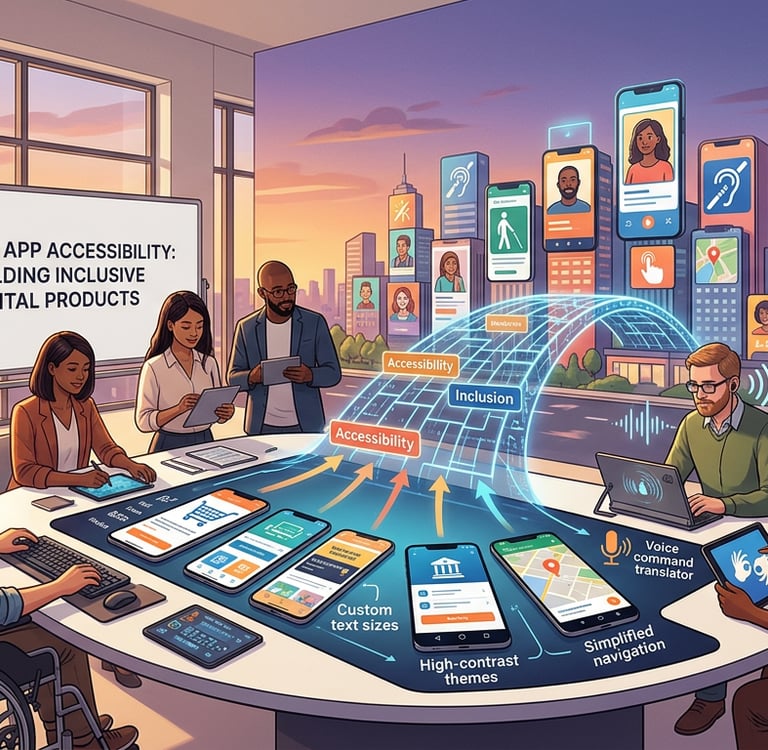
Understanding Mobile App Accessibility
Mobile app accessibility refers to the practice of designing and developing mobile applications that can be used by individuals with varying disabilities. These disabilities may include visual, auditory, physical, and cognitive impairments. The goal of accessibility in mobile apps is to ensure that all users, regardless of their abilities, have an equal opportunity to access and engage with digital content and services.
The importance of mobile app accessibility cannot be overstated. By creating applications that cater to the needs of users with disabilities, designers can profoundly enhance user experience. For instance, it allows visually impaired users to navigate an app using screen readers, while auditory support ensures that individuals with hearing impairments can access essential information. This inclusive approach also fosters a sense of belonging among users who may otherwise feel marginalized in the digital landscape.
Furthermore, mobile app accessibility is not just a matter of user experience; it also has significant legal and ethical implications. Various regulations and standards, such as the Americans with Disabilities Act (ADA) in the United States and the Web Content Accessibility Guidelines (WCAG), mandate that digital products be accessible to all. Failure to comply with these guidelines can lead to significant legal ramifications for developers and organizations, making it imperative that accessibility is integrated from the initial design stages through to development and deployment.
Beyond compliance and ethical considerations, accessible mobile applications can expand market reach. With a significant percentage of the population experiencing some form of disability, neglecting this demographic can result in lost opportunities. By designing with accessibility in mind, businesses not only improve their public image but also unlock potential revenue streams, creating a more inclusive digital environment for all users.
Key Accessibility Best Practices in App Development
Creating an application that is accessible to all users, including those with disabilities, requires thoughtful strategies and best practices during the development process. One of the critical elements is designing for screen readers. This involves structuring your app’s content semantically so that assistive technologies can provide clear and meaningful feedback to users. Use appropriate HTML tags, such as headings, lists, and alt text for images, to enhance the experience for those relying on these tools.
Another essential aspect is ensuring that your app's color contrast meets established standards. High contrast between text and background colors not only benefits users with visual impairments but also enhances readability for all users. Tools like contrast checkers can help developers verify if they meet the required ratios to make content legible.
Keyboard navigation is also vital for accessibility; many users cannot use a touchscreen efficiently. Developers should ensure that every functionality within the app can be accessed using a keyboard. This includes being able to navigate through menus, forms, and interactive elements without relying on a mouse or touch input.
Additionally, implementing voice command features can significantly improve the app's accessibility. Voice recognition technology allows users to interact with the application using voice commands, which facilitates usage for individuals with mobility impairments. Developers should consider incorporating features that allow for voice-activated commands to navigate and execute functions effectively.
Incorporating these best practices not only enhances accessibility but also creates a better overall user experience. As app developers continue to focus on creating inclusive digital products, understanding and implementing these strategies can lead to a more usable and welcoming environment for everyone.
Testing for Accessibility: Tools and Techniques
Ensuring mobile app accessibility requires a multifaceted approach that includes various tools and techniques to identify potential barriers for users with disabilities. Both manual and automated methods play critical roles in crafting an inclusive digital product that caters to diverse user needs.
Manual testing methods allow developers to gain firsthand insights into the usability of their app. Testers can utilize screen readers, keyboard navigation, and color contrast checkers to evaluate how effectively the app serves users with visual impairments, mobility issues, or cognitive challenges. Subsequently, involving individuals with disabilities in usability testing provides invaluable feedback and reveals issues that may not be readily apparent to developers. Such user testing is essential, as it helps identify specific barriers that may hinder user experience.
On the other hand, automated testing tools can significantly enhance the efficiency of accessibility evaluations. Numerous tools exist, such as Axe, WAVE, and Lighthouse, which automatically scan applications for accessibility violations based on established guidelines like the Web Content Accessibility Guidelines (WCAG). These tools provide actionable reports that can assist developers in pinpointing areas requiring improvement, thus enabling a proactive approach to accessibility throughout the app development lifecycle.
Integrating both manual and automated accessibility testing into every phase of the app development lifecycle is crucial. Conducting preliminary checks during the design phase helps catch issues early, while ongoing assessments allow teams to adjust and adapt as the app evolves. This approach not only mitigates risks associated with accessibility compliance but also fosters a culture of inclusivity within the development team.
The Future of Accessible App Development
As technology continues to evolve, the future of accessible app development is becoming increasingly promising. Emerging trends and technologies are playing a pivotal role in shaping how developers approach inclusivity in mobile applications. One of the most significant advancements is the integration of artificial intelligence (AI) and machine learning (ML). These technologies enable the analysis of user interactions, allowing developers to understand and anticipate the needs of diverse users, including those with disabilities. By leveraging AI-driven tools, developers can create applications that adapt in real-time, offering personalized user experiences that cater to various accessibility requirements.
Another essential trend is the adoption of design thinking principles in app development. Design thinking emphasizes empathy and user-centered design, encouraging developers to engage with users during the development process. This approach results in products that are not only functional but also inclusive. By involving people with disabilities in testing and feedback sessions, teams can identify potential accessibility barriers early in the development cycle and make necessary adjustments. This collaborative process fosters innovation and leads to the creation of more accessible apps.
Furthermore, cultivating a culture of accessibility within development teams is crucial for ensuring ongoing improvements in digital equity. Organizations are increasingly recognizing the importance of training their teams to prioritize accessibility from the outset. By embedding accessibility principles into the development lifecycle, teams can produce inclusive products that are intuitive for all users.
In conclusion, the future of accessible app development is bright, driven by technological advancements and a growing commitment to inclusivity. By embracing AI, design thinking, and cultivating a culture of accessibility, developers can create mobile applications that not only meet but exceed the accessibility standards, ensuring meaningful experiences for every user.
Connect With Us
Your partner in custom software solutions and design.
Innovate Today, Reach Out!
contact@atumcode.com
+1 202 292 4041
+91 801 091 1708
© 2026. All rights reserved.
Warje, Pune 411058, Maharashtra, India

AtumCode Solutions Pvt. Ltd.
Beyond Code, Building Vision!
D&B D-U-N-S Number : 76-637-9675